For Appointment: +91 6290 967 376
(9am to 8pm)
(9am to 8pm)
Mail: susmit.naskar@yahoo.com


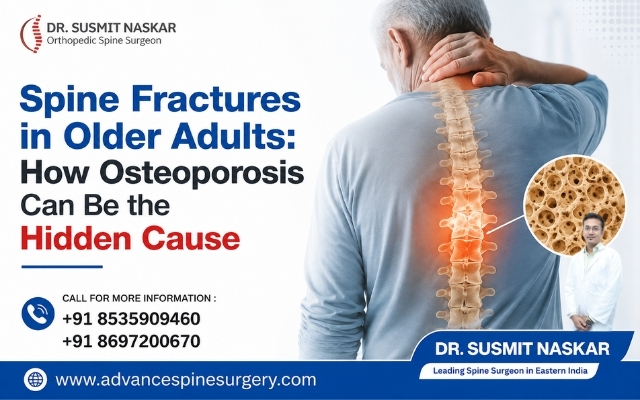
Spine fractures in older adults are often mistaken for routine back pain or age-related discomfort. However, osteoporosis can quietly weaken spinal bones until even a minor fall, sudden twist, or everyday movement causes a vertebral fracture. Consulting the best spine specialist in Kolkata can help identify whether persistent pain is linked to weakened vertebrae rather than a simple muscular problem.
Osteoporosis reduces bone density and makes vertebrae fragile. As the condition progresses, the bones lose their ability to withstand normal pressure. A vertebral compression fracture can occur without a major accident and may develop after bending, lifting, coughing, or slipping. Older adults, especially postmenopausal women, face greater risk because bone loss can accelerate with age. In many cases, osteoporosis remains unnoticed until a fracture occurs. Recognizing bone weakness early can help reduce the risk of repeated spinal fractures. Regular bone-density checks, proper nutrition, safe exercise, and timely medical evaluation can play an important role in protecting long-term spine health.
Sudden or persistent back pain, reduced height, a stooped posture, limited mobility, and pain that worsens while standing or walking may indicate a spinal fracture. Some fractures cause only mild symptoms initially and remain undiagnosed. An evaluation by the best spine doctor in Kolkata may include a clinical examination, X-rays, MRI, or bone-density testing to assess both the fracture and underlying bone weakness.
A previous osteoporotic fracture increases the risk of additional fractures. Early diagnosis is important for relieving pain, protecting spinal alignment, and maintaining mobility. Treatment may include pain management, activity modification, physiotherapy, bracing, osteoporosis medication, calcium and vitamin D guidance, or surgery in selected cases. The approach depends on fracture severity, neurological symptoms, overall health, and bone quality.
Preventing future fractures requires attention to both the spine and the osteoporosis causing weakness. Regular bone-health assessments, safe weight-bearing exercise, fall prevention, proper nutrition, and adherence to prescribed osteoporosis treatment can help reduce risk.
Dr Susmit Naskar, an Orthopedic Spine Surgeon, focuses on diagnosis and evidence-based management of spinal conditions in older adults. For patients seeking the best spine specialist doctor in Kolkata, his approach emphasizes identifying the underlying cause, preserving mobility, and supporting long-term spine and bone health.