For Appointment: +91 6290 967 376
(9am to 8pm)
(9am to 8pm)
Mail: susmit.naskar@yahoo.com


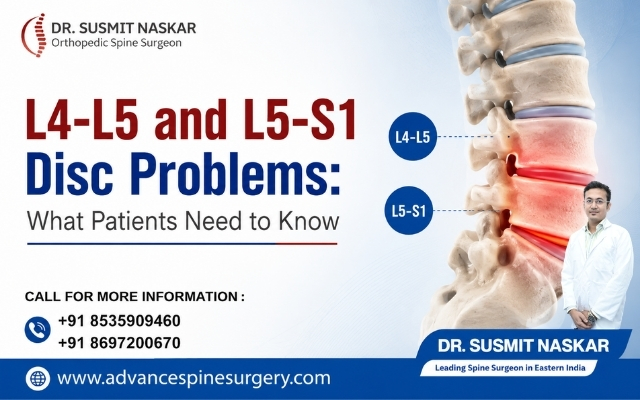
Disc problems at L4-L5 and L5-S1 are common causes of lower back pain because these levels carry body weight and allow frequent movement. When a disc bulges, herniates, or loses height, it can irritate nearby nerves and cause pain that spreads to the buttocks, legs, or feet. Persistent symptoms deserve assessment, especially when daily movement becomes difficult. A consultation with the best spine surgeon in Kolkata may help patients understand whether symptoms are related to a disc problem or another spinal condition.
The lower lumbar spine is exposed to repeated bending, lifting, twisting, and prolonged sitting. Over time, this stress can weaken the discs between the vertebrae. At L4-L5, nerve compression may cause pain, tingling, or weakness along the outer leg and foot. At L5-S1, symptoms can affect the back of the leg, calf, or sole. Not every disc change causes symptoms, so clinical examination remains important.
Some patients experience mild backache, while others develop sharp radiating pain, numbness, muscle weakness, or difficulty standing. A back pain doctor in Kolkata may recommend physical examination and imaging when symptoms persist or neurological signs appear. Urgent medical attention is needed if there is loss of bladder or bowel control, numbness around the groin, or rapidly increasing leg weakness.
Treatment depends on symptom severity, nerve involvement, and daily function. Many patients improve with activity modification, physiotherapy, posture correction, medicines, and guided exercises. In selected cases, injections may reduce inflammation. Surgery is generally considered when severe nerve compression causes progressive weakness, disabling pain, or when conservative treatment fails to provide adequate relief. Early diagnosis and consistent treatment can often support better recovery and long-term spinal health.
Patients should avoid assuming that every MRI finding requires surgery. A careful diagnosis should connect scan findings with symptoms and physical examination. Dr Susmit Naskar, an Orthopedic Spine Surgeon, provides evidence-based evaluation and individualized care for lumbar disc conditions. Consulting the best spine specialist in Kolkata can help patients understand treatment choices, recovery expectations, and steps for returning safely to daily activities.