For Appointment: +91 6290 967 376
(9am to 8pm)
(9am to 8pm)
Mail: susmit.naskar@yahoo.com


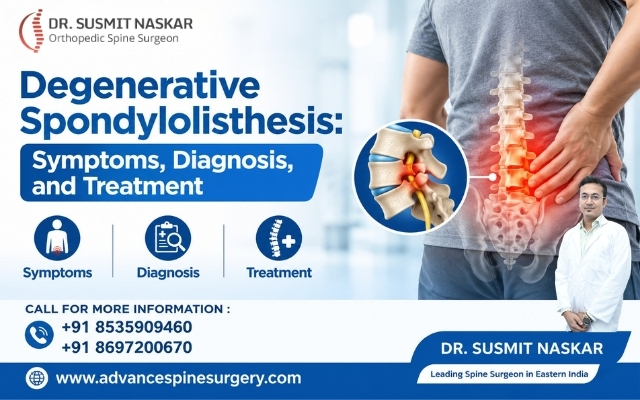
Degenerative spondylolisthesis is a spinal condition in which one vertebra gradually slips forward over the vertebra below it. It most often affects the lower back and is commonly linked with age-related wear in the joints, discs, and supporting structures of the spine. People searching for the spine surgeon in Kolkata often do so after persistent pain begins to interfere with walking, standing, sleep, or everyday activities. Understanding the condition early can help patients make informed decisions about care.
Symptoms can vary depending on the degree of slippage and whether nearby nerves are compressed. Common signs include lower back pain, stiffness, pain spreading to the buttocks or legs, tingling, numbness, and weakness. Some people may feel worse while standing or walking for long periods and better when sitting or bending slightly forward. A back pain doctor in Kolkata may assess whether these symptoms are related to spondylolisthesis, spinal stenosis, disc problems, or another musculoskeletal condition.
Diagnosis usually begins with a detailed medical history and physical examination. The doctor may check posture, spinal movement, muscle strength, reflexes, sensation, and walking pattern. X-rays can show the position and movement of the vertebrae, while MRI scans may help identify nerve compression, disc degeneration, or narrowing of the spinal canal. Consultation with the spine specialist in Kolkata can also help determine how severe the condition is and whether conservative treatment is appropriate.
Treatment depends on symptoms, overall health, activity level, and the amount of vertebral slippage. Many patients improve with physiotherapy, activity modification, posture correction, weight management, and prescribed pain-relief or anti-inflammatory medicines. In selected cases, spinal injections may be considered. Surgery is generally reserved for persistent pain, worsening nerve symptoms, significant instability, or reduced mobility despite non-surgical care.
Dr Susmit Naskar, an Orthopedic Spine Surgeon, focuses on careful evaluation and evidence-based treatment planning for spinal conditions such as degenerative spondylolisthesis. His approach aims to explain the diagnosis clearly, explore appropriate non-surgical options first when suitable, and consider surgery only when clinically necessary, helping patients understand each stage of their spine care.