For Appointment: +91 6290 967 376
(9am to 8pm)
(9am to 8pm)
Mail: susmit.naskar@yahoo.com


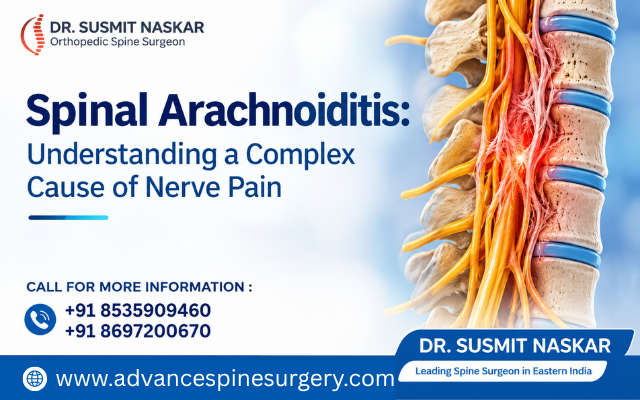
Spinal arachnoiditis is a rare but challenging condition that affects the arachnoid, one of the membranes surrounding the spinal cord and nerve roots. Inflammation in this area can cause scar tissue to form, making nerve roots stick together and disrupting normal nerve function. A spine surgeon in Kolkata may consider arachnoiditis when persistent nerve pain, burning, tingling, or weakness cannot be explained by more common spinal problems.
Arachnoiditis may develop after spinal surgery, infection, trauma, bleeding around the spinal cord, or irritation caused by certain procedures or substances introduced near the spine. In some people, the exact cause remains unclear. Because the condition can produce symptoms similar to disc problems or spinal stenosis, careful evaluation is important before reaching a diagnosis.
Symptoms can vary widely depending on the nerves involved. Some people experience severe burning pain, electric-shock sensations, numbness, muscle cramps, or weakness in the legs. In more advanced cases, bladder, bowel, or sexual function may also be affected. A back pain doctor in Kolkata may use a detailed neurological examination together with MRI findings to look for nerve-root clumping, scarring, or other changes associated with arachnoiditis.
There is no single treatment that works for every patient, so management usually focuses on controlling symptoms and maintaining mobility. Medicines for neuropathic pain, physiotherapy, graded activity, and rehabilitation may help improve daily function. Some patients may also benefit from pain-management procedures. Surgery is considered cautiously because additional scar formation can sometimes worsen symptoms. A spine specialist in Kolkata may help determine which treatment approach is most appropriate based on severity and functional limitations.
Because spinal arachnoiditis can be difficult to diagnose and manage, an accurate assessment is essential. Dr Susmit Naskar, an Orthopedic Spine Surgeon, focuses on identifying the source of nerve-related symptoms and explaining suitable treatment options in a clear, evidence-based manner. His approach emphasizes careful diagnosis, realistic expectations, and individualized care for complex spinal conditions.